
The dual-layer ESD
protection system that’s becoming the standard for PCB handling, SMT production
lines, and sensitive component logistics across Europe.
Published
April 2026 | Yufa Polymer Technical Blog | 8
min read
The Hidden Cost of Electrostatic Discharge in Electronics
Manufacturing
Electrostatic discharge (ESD) remains one
of the most persistent and expensive failure modes in electronics
manufacturing. According to the ESD Association, ESD-related damage accounts
for 8–33% of all electronic component failures, costing the global
industry an estimated $5 billion annually in rejected parts, field failures,
and reduced product reliability.
The challenge intensifies when components
move between workstations. A bare PCB traveling from an SMT pick-and-place
machine to an AOI inspection station can accumulate thousands of volts of
static charge from friction with unprotected surfaces — enough to destroy
sensitive ICs, MOSFET gates, or flash memory chips without any visible sign of
damage.
This is precisely why Europe’s leading
electronics manufacturers have converged on a deceptively simple but highly
effective solution: pairing injection-molded ESD PP trays with precision-cut
anti-static EVA foam liners.
The Tray + Foam Liner System: Simple Design, Serious Protection
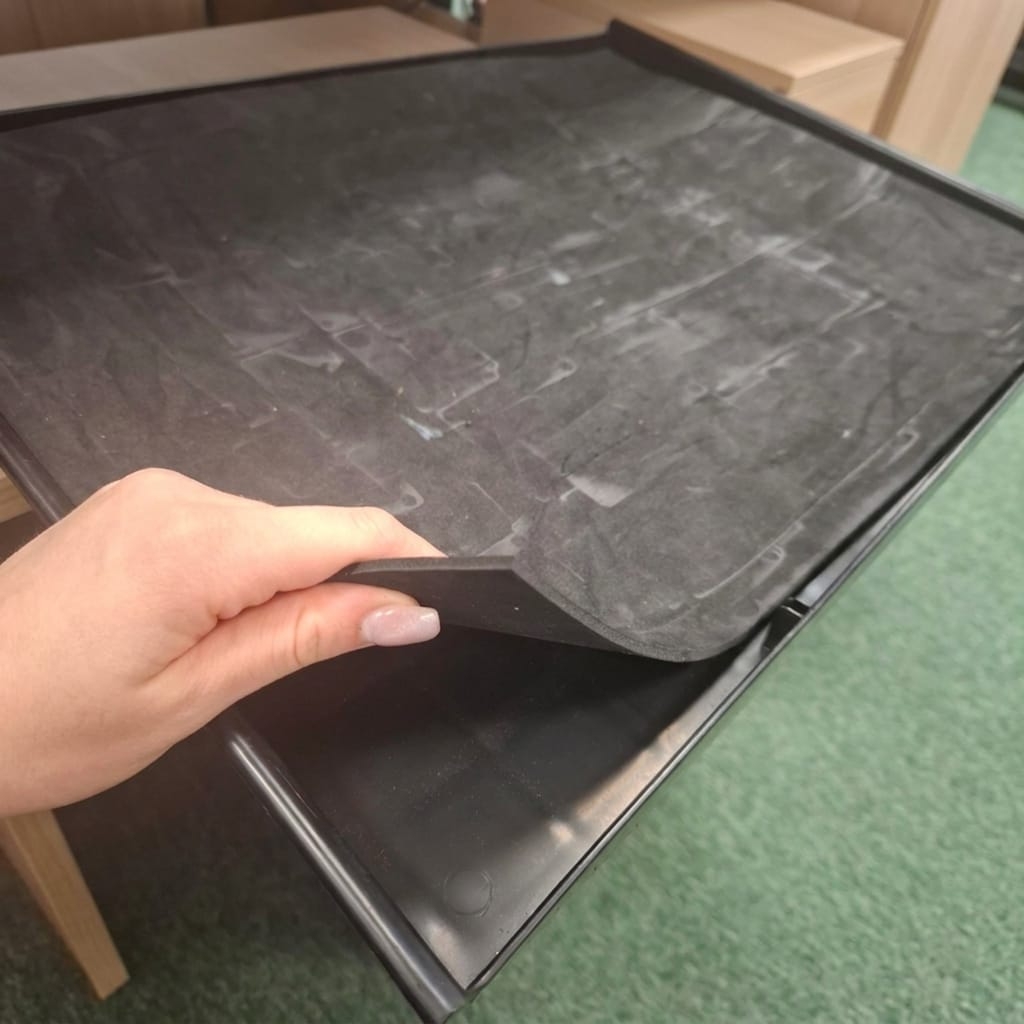
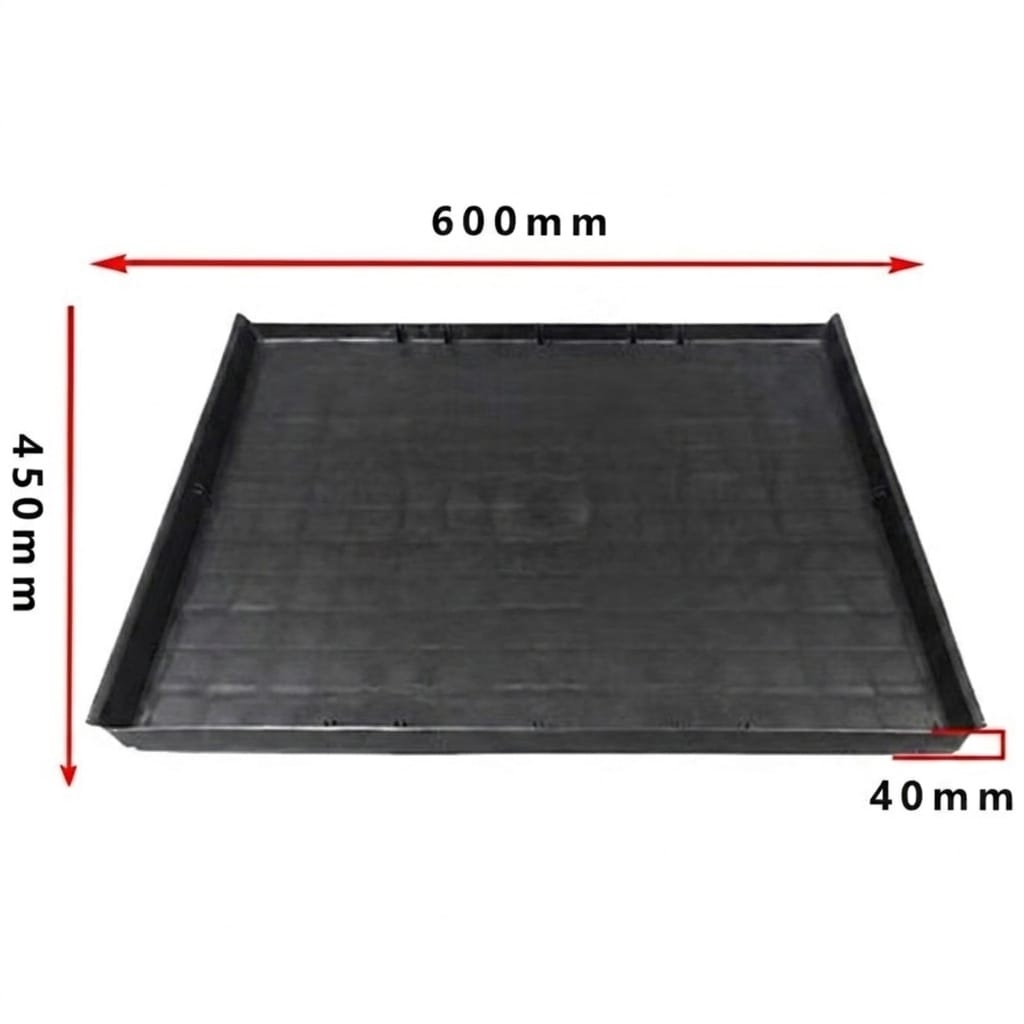
The concept is straightforward: a rigid, injection-molded ESD polypropylene tray (View ESD PP Tray Products) provides structural integrity and stackability, while a 3mm anti-static EVA foam sheet (View ESD EVA Foam Products) lines the bottom surface to provide cushioning, surface protection, and an additional ESD-safe contact layer.
Together, they form a dual-layer ESD protection system: the tray dissipates static charge across its surface (surface resistivity 10⁴–10¹¹ Ω), while the foam prevents physical contact damage and triboelectric charging when components are placed or removed.
Product Specifications
ESD PP Tray
|
Dimensions |
600 × 450 × 40 mm |
|
Material |
Carbon-loaded Polypropylene (PP) |
|
Surface Resistivity |
10⁵ – 10⁹ Ω |
|
Process |
Injection Molded |
|
Color |
Black |
|
Stackable |
Yes — nested & stacked |
|
Euro-Pallet Fit |
Yes — 2×2 on 1200×800 pallet |
ESD EVA Sheet
|
Thickness |
3 mm |
|
Cut Size |
~580 × 430 mm (tray-fitted) |
|
Material |
Closed-cell EVA foam, carbon-loaded |
|
Surface Resistivity |
10⁵ – 10⁹ Ω |
|
Density |
~60–80 kg/m³ |
|
Color |
Black |
|
Compression Set |
< 15% (excellent rebound) |
Where This System Gets Deployed
SMT Production Lines
Work-in-progress (WIP) trays shuttle bare and assembled PCBs between pick-and-place, reflow soldering, and AOI inspection stations. The foam liner prevents board flex and solder joint stress during transit.
Inter-Facility Transport
Stacked trays with foam liners travel between manufacturing buildings or from SMT to final assembly. The 600×450mm footprint fits euro-pallets perfectly — 4 trays per layer, maximizing logistics efficiency.
Buffer Storage & WIP Staging
Between production stages, components rest in ESD-safe storage racks. The shallow 40mm tray height enables high-density vertical stacking while the foam keeps parts stationary and protected.
Display Panel Handling
LCD, OLED, and TFT panels require both ESD protection and scratch-free surfaces. The soft EVA cushion eliminates glass-on-plastic contact marks while the tray’s raised edges prevent sliding.
Semiconductor & Module Assembly
Power modules, sensor arrays, and other flat electronic sub-assemblies benefit from the uniform, non-abrasive foam surface combined with the structural rigidity of the injection-molded tray.
Why ESD Trays and EVA Foam Liners Work Better Together
Neither the tray nor the foam alone delivers complete protection. Here’s why the combination is more than the sum of its parts:
|
Protection Layer |
Tray Alone |
Foam Alone |
Tray + Foam |
|
ESD surface dissipation |
✓ |
✓ |
✓✓ |
|
Shock & vibration absorption |
✗ |
✓ |
✓ |
|
Scratch-free surface contact |
✗ |
✓ |
✓ |
|
Structural rigidity / stackability |
✓ |
✗ |
✓ |
|
Euro-pallet logistics compatibility |
✓ |
✗ |
✓ |
The rigid tray handles logistics and stacking; the soft foam handles component-level surface protection. Together, they create a complete ESD-safe handling ecosystem.
The Business Case: ESD Damage in Numbers
Industry data consistently shows that improper component handling is the #1 cause of latent ESD damage — defects that pass QC but fail in the field.
|
Stage |
Without ESD System |
With Tray + Foam |
|
Handling & Transfer |
34% |
4% |
|
Storage |
18% |
3% |
|
Assembly Process |
22% |
8% |
|
Testing & QC |
14% |
5% |
|
Shipping |
12% |
2% |
Source: ESD Association, IPC/JEDEC industry surveys. Figures represent composite industry averages.